

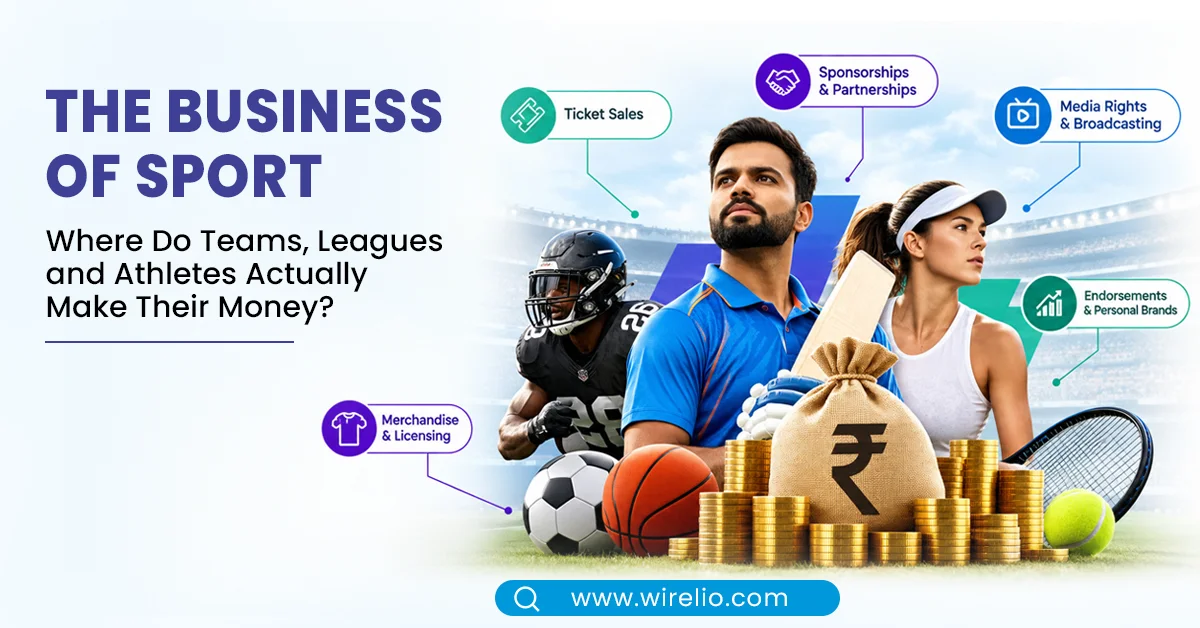

When watching a cricket match, football game or basketball tournament we are likely to focus on the players, the score and the final result but behind every sporting event there is a big business.
Teams need to pay their players and coaches, maintain stadiums, and the broadcasters pay for the right to show the match. Brands invest in jerseys and advertisements and the fans buy tickets, merchandise and the food.
But where does the money come from?
The business of sport revolves around a number of revenue streams, from broadcasting rights and sponsorships to ticket sales, merchandise, licensing and digital content. The interesting thing is that a sports team doesn't just sell a game. They sell attention, entertainment, access to a loyal audience.
Let's see how the sports business works.
1. Broadcasting rights
Broadcasting rights are one of the biggest revenues for sports. Think about the last major sporting tournament that you watched at home. You may have not bought a ticket to watch it, but somebody did, in order to bring you the game. These are the sports broadcasting rights.
Television networks and streaming platforms pay leagues or tournament organisers for the right to broadcast matches.
A broadcaster could pay a league a big amount for the exclusive rights to show its matches for several seasons. The broadcaster then tries to recover the investment with:
- Advertising
- Sponsorships
- Subscriptions
- Premium streaming plans
- Digital advertising
- Partnerships
Now it's the turn of the League → Broadcaster/Streaming Platform → Advertisers & Subscribers → Revenue
The bigger and more engaged the audience, the more valuable can be broadcasting rights.
And so it's also possible for a major sports event to attract advertisements from companies from completely different industries. A telecom company, bank, automobile manufacturer, food brand and smartphone company may all want to reach the sports audience.
2. Sponsorships
Looking at a professional sports jersey you will often see multiple logos. These are the companies that pay sports teams, leagues and tournaments to have sponsorship opportunities. Sponsorships are a way for brands to be part of the game.
A sponsorship deal can include:
- Jersey branding
- Stadium advertising
- Player appearance
- Digital campaigns
- Social media promotions
- Tournament sponsorship
- Official partner status
- Branded content
For a brand, sports can offer something that traditional advertising sometimes struggles to deliver: emotional connection. A fan doesn't just watch their favorite teams, but is loyal to them. A brand associated with that team can become part of the experience of the fan.
3. Ticket sales
Despite the growth of television and streaming services, people still want to experience sport in person. Ticket sales are still very important.
Stadiums can make revenue from:
- Match tickets
- Season passes
- VIP seating
- Hospitality packages
- Premium lounges
- Food and beverages
- Parking
- Merchandise
A normal ticket and a premium hospitality package can have very different prices allowing teams and stadium operators to serve different types of customers. For example, one fan could buy an affordable regular ticket, while a corporate customer could pay significantly more for a premium box including the hospitality services. The match is the same, but the experience, and therefore the price, is different.
4. Merchandise
Sports merchandise is another big business and it turns fans into customers, fans can buy team jerseys, caps, scarves, shoes, bags, mugs, flags, collectibles, and player merchandise.
Merchandise also allows the fan to express their identity. Someone wearing a team's jersey is not just buying clothing, but expressing which team they support. This makes sports merchandise particularly valuable from a branding point of view. A team can continue to earn from a fan long after the match has ended.
5. Licensing
Sports organisations don't have to manufacture every product themselves. They can license their name, logo images or intellectual property to other companies, who will be able to use it for producing goods. For example, a sports league might allow a company to make officially licensed video games, toys, clothing, school products, collectibles, and accessories.
The company will sell the product and pay the sports organisation according to the licensing agreement. It's a simple business model:
Sports brand → Licensing agreement → Product company → Consumer.
The sports organisation earns from its intellectual property while another company handles most of the production and distribution.
6. Athletes can make money beyond their salaries
Depending on their sport, popularity and commercial appeal, players and athletes can earn through salaries, tournament winnings, sponsorships, brand endorsements, appearance fees, social media partnerships, merchandise, personal businesses, and licensing deals.
Salaries, tournament winnings, sponsorships, brand endorsements, appearance fees, social media partnerships, merchandise, personal businesses, and licensing deals
Salaries, tournament winnings, sponsorships, brand endorsements, appearance fees, social media partnerships, merchandise, personal businesses, and licensing deals
Salaries, tournament winnings, sponsorships, brand endorsements, appearance fees, social media partnerships, merchandise, personal businesses, and licensing deals
Take into account a famous athlete with millions of followers. A sports brand might pay him to promote shoes, while a beverage company could sign another endorsement deal. A technology company could collaborate with the athlete for a campaign. The athlete's value goes beyond what he can bring in the field, while his personal brand can become a business asset.
7. Social media has created a new economy of sports
Sports fans no longer interact with their favorite athletes only during the matches. They follow them on Instagram, YouTube, X, Facebook, TikTok, and other digital platforms.
Instagram, YouTube, X, Facebook, TikTok, and other digital platforms
Instagram, YouTube, X, Facebook, TikTok, and other digital platforms
This gives the athletes and teams direct access to their audience. A player can post training videos, behind-the-scenes content, interviews, lifestyle content and sponsored posts. Teams can also use social media to promote:
- Upcoming matches
- Merchandise
- Ticket sales
- Sponsors
- Exclusive content
- Fan experiences
The result is a shift from match-day entertainment to year-round engagement.
8. Digital subscriptions
Sports used to rely heavily on television, but now fans can also watch matches through streaming services, mobile applications and digital platforms. Digital subscriptions are changing how sports is consumed. This opens up new revenue opportunities through monthly subscriptions, annual memberships, premium matches, pay-per-view events, exclusive digital content, and advertising-supported streaming.
For younger audiences in particular, watching sport doesn't have to mean sitting in front of a television. A smartphone can be the stadium, television and news all at once.
9. Leagues
A league isn't simply a collection of teams. Leagues make money by creating valuable competitionIt organizes a competition that audiences can follow throughout the season. This makes leagues valuable since they can sell multiple things simultaneously:
Matches + Teams + Players + Stories + Statistics + Fan attention
A league can therefore generate revenue from broadcasting rights, sponsorships, ticketing, licensing, merchandise, digital content, advertising, and partnerships.
The league also creates a predictable schedule, allowing the broadcasters and the advertisers to plan around the sporting calendar.
10. Player transfers
In some sports, particularly football, player transfers can involve huge amounts of money. A club can pay another club for the player's registration rights, while the player will negotiate his salary and other contractual terms. This creates an ecosystem involving clubs, players, agents, sponsors, broadcasters, and fans.
A successful player can also increase the commercial value of a team. More attention can mean more merchandise sales, more social media engagement and potentially better sponsorship opportunities.
11. Sports aren't only about the players
A major sporting event requires hundreds or even thousands of people working behind the scenes. Think about all the things that go into a professional match:
- Coaches
- Medical staff
- Referees
- Security
- Groundskeepers
- Broadcast crews
- Commentators
- Camera operators
- Event managers
- Ticketing staff
- Hospitality teams
- Marketing professionals
- Data analysts
This creates an entire sports industry ecosystem. The business of sport therefore creates employment far beyond just the athletes.
The lessons we learn from sport aren't limited to statistics or performance. Team sports can also teach us lessons that matter like communication, responsibility and collaboration — skills that matter long after the final whistle.
12. Data and technology are becoming valuable
Modern sport increasingly relies on technology. Teams use data to analyse:
- Player performance
- Fitness
- Opponent strategies
- Match statistics
- Fan behaviour
- Ticket demand
- Merchandise sales
Technology is also changing the viewing experience. Fans can access live statistics, player tracking, instant replays, fantasy sports, interactive broadcasts, and personalised notifications.
Technology is changing not only professional sport but also the way people interact with everyday devices, from smart gadgets to connected digital tools.
For sports businesses, data can help answer an important question: what do fans want? If a team knows that its audience interacts heavily with short-form videos, for example, it can invest more heavily in that type of content.
13. Fantasy sports and fan engagement
Sports fans are increasingly interacting with games beyond just watching them. Fantasy sports allow users to create virtual teams based on real-world athletes and compete using player performances. This adds another layer of engagement around sporting competitions. Even when a person's favorite team isn't playing, they may continue to follow individual players due to fantasy leagues, statistics or other digital experiences. The more frequently fans interact with a sport, the more opportunities businesses have to monetize the attention.
FAQs
1. How do sports teams make money?
Sports teams make money through several revenue streams, including broadcasting rights, sponsorships, ticket sales, merchandise, licensing, hospitality, memberships, advertising and commercial partnerships.
2. What are the main sources of revenue for sports teams?
The main sources of sports team revenue include broadcasting rights, sponsorship deals, matchday revenue, merchandise sales, licensing, ticket sales and commercial partnerships. The importance of each source varies by sport, league and market.
3. How do sports leagues make money?
Sports leagues generate revenue by selling broadcasting and media rights, attracting sponsors, licensing their brand, selling advertising opportunities, distributing merchandise and generating income from events and digital platforms.
4. How do sports broadcasting rights make money?
Sports leagues sell the rights to broadcast their matches to television networks and streaming platforms. Broadcasters then generate revenue through advertising, subscriptions, sponsorships and other commercial opportunities.
5. Why are sports broadcasting rights so valuable?
Major sports events attract large and engaged audiences, making them valuable to broadcasters and advertisers. Broadcasting rights can therefore become a significant source of income for leagues and teams.
6. How do athletes make money besides their salaries?
Athletes can earn money through brand endorsements, sponsorships, prize money, appearance fees, social media partnerships, merchandise, licensing deals and personal businesses. Their popularity and audience reach can significantly influence their commercial opportunities.
7. How do sports sponsorships work?
Sports sponsorships involve brands paying teams, leagues, tournaments or athletes for promotional opportunities. These can include jersey branding, stadium advertising, social media campaigns, player appearances and official partnership arrangements.
8. How do sports teams make money from merchandise?
Teams can generate revenue from officially branded products such as jerseys, caps, scarves, bags, accessories and collectibles. Merchandise also helps teams strengthen their relationship with fans.
Final Thoughts
A sports organisation isn't just selling a 90-minute football match or a three-hour cricket game. It is selling an entire experience. The fan buys into the competition, rivalries, stories, players, team, community, entertainment, memories. Think about a cricket fan who buys a jersey, subscribes to a streaming service, watches every match, follows players on social media and eventually attends a live game. That one fan can generate value for a number of different businesses.
For more insights, check out Wirelio - Beyond Headlines.

No comments posted yet. Be the first to express your thoughts!