

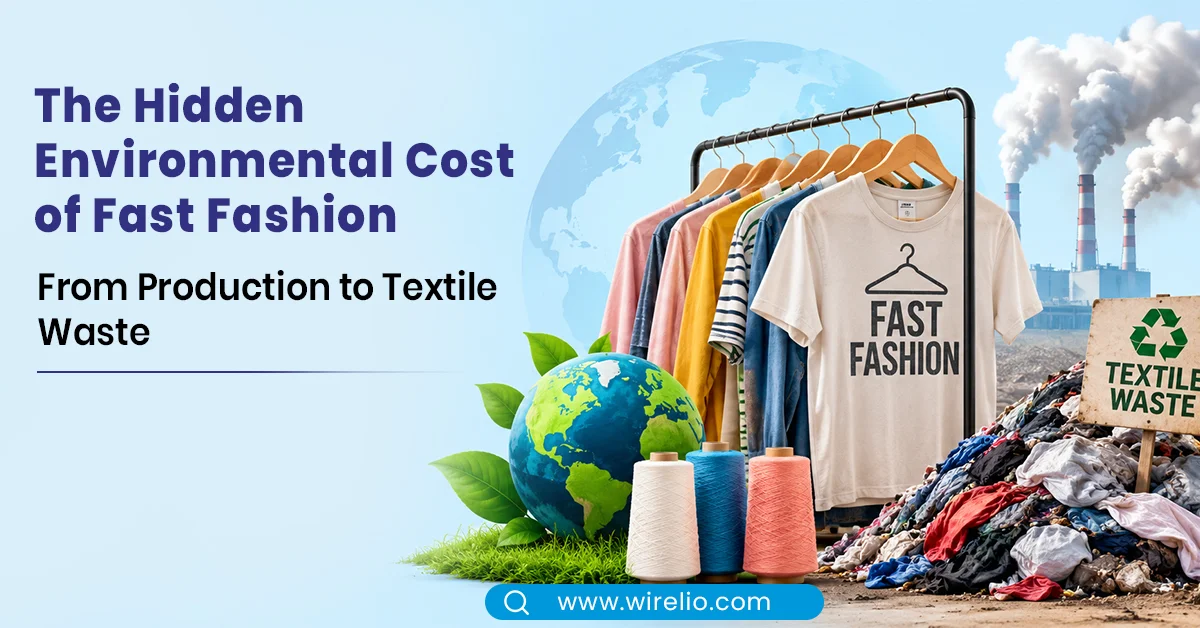

A new outfit can cost less than a restaurant meal, arrive within days and disappear from fashion trends just as quickly. Behind that convenience lies a global production system that consumes enormous amounts of energy, water and raw materials while generating growing volumes of textile waste.
The environmental impact of fast fashion is no longer limited to factories or landfill sites. It extends across cotton fields, synthetic fibre production, dyeing facilities, international shipping routes and household washing machines that release microscopic plastic fibres into waterways.
The challenge is not that buying clothes is inherently harmful. Clothing is essential. The issue is how quickly garments are produced, purchased and discarded. As fashion cycles accelerate, many items are worn fewer times before being replaced, increasing pressure on natural resources and waste systems.
Understanding a garment's journey—from fibre production to disposal—helps explain why governments, brands and consumers are increasingly discussing sustainable fashion and circular textile systems.
From Cotton Fields to Closets: The Environmental Journey of a Garment
Every piece of clothing begins with raw materials, whether they are natural fibres such as cotton or synthetic materials such as polyester.
Cotton production often requires significant water resources and agricultural inputs, although environmental impacts vary depending on farming methods, irrigation practices and local conditions. Polyester, one of the world's most widely used textile fibres, is produced from fossil-fuel-based materials, making it part of a resource-intensive manufacturing chain.
After fibres are produced, they pass through spinning, weaving or knitting, dyeing, finishing and garment assembly. Each stage requires energy, chemicals and transportation.
The UN Environment Programme (UNEP) notes that textile production has substantial environmental consequences, including greenhouse gas emissions, chemical pollution and high resource consumption across global supply chains.
Many garments also travel across multiple countries before reaching consumers. Cotton may be grown in one region, spun into yarn elsewhere, stitched in another country and finally shipped to retail markets around the world.
This international supply chain means the environmental footprint of clothing extends well beyond the shop where it is purchased.
Why Fast Fashion Creates More Textile Waste
Fast fashion encourages rapid product turnover.
Instead of introducing a few seasonal collections, many brands release new products throughout the year. This shorter product cycle can encourage more frequent purchases and quicker replacement of existing clothing.
The result is growing textile waste.
According to the UN Environment Programme, large quantities of clothing are discarded every year, while much of the material is either landfilled, incinerated or lost instead of being recycled into new garments.
The Ellen MacArthur Foundation has also highlighted that many garments are used for relatively short periods before disposal, representing both wasted materials and lost economic value.
The problem is particularly challenging because different fabrics behave differently at the end of their lives.
Natural fibres may biodegrade under suitable conditions, although dyes and chemical treatments can affect this process.
Synthetic fabrics such as polyester may persist much longer in the environment.
Mixed-fibre garments can be difficult to recycle because separating different materials requires specialised processes.
Even donated clothing does not always remain in local reuse systems. Some garments enter international second-hand markets, while others ultimately become waste when demand cannot absorb growing volumes of discarded clothing.
The Hidden Pollution Beyond Carbon Emissions
When discussing climate change, attention often focuses on carbon emissions. However, the clothing industry affects the environment in several other ways.
Water Consumption
Water plays a major role throughout textile production.
It is used during fibre cultivation, dyeing, washing and finishing processes. Dyeing and textile treatment can also generate wastewater that requires proper management to prevent pollution.
Microplastic Pollution
One of the less visible environmental concerns involves synthetic clothing.
When polyester and other synthetic garments are washed, they can release tiny plastic fibres that enter wastewater systems. Some of these microfibres eventually reach rivers, lakes and oceans.
The International Union for Conservation of Nature (IUCN) has identified synthetic textiles as a significant source of primary microplastics entering marine environments.
Chemical Use
Textile production often involves dyes, finishing treatments and processing chemicals.
Responsible manufacturing practices, wastewater treatment and stronger environmental standards can help reduce pollution, but performance varies across suppliers, regions and regulatory systems.
These issues illustrate why evaluating clothing's environmental impact requires looking beyond carbon emissions alone.
What Brands, Policymakers and Consumers Can Change
Reducing fashion's environmental footprint requires action from multiple parts of the system.
What Brands Can Do
Fashion companies can improve sustainability by:
Designing more durable products.
Using recycled or responsibly sourced materials where appropriate.
Improving supply-chain transparency.
Reducing waste during manufacturing.
Expanding repair, resale and take-back programmes.
Some brands have introduced clothing collection initiatives or second-hand marketplaces. However, independent organisations continue to emphasise that recycling alone cannot solve the industry's environmental challenges if production volumes continue growing rapidly.
What Policymakers Can Do
Governments can influence the industry through regulation and infrastructure.
Examples include:
Supporting textile collection and recycling systems.
Encouraging eco-design standards.
Strengthening chemical and wastewater regulations.
Improving producer responsibility frameworks.
Supporting innovation in textile recycling technologies.
The European Union, for example, has introduced measures under its Strategy for Sustainable and Circular Textiles aimed at making textile products more durable, repairable and recyclable over time.
Other countries are exploring similar approaches, although implementation varies significantly.
What Consumers Can Do
Individual choices cannot solve systemic problems alone, but they can reduce unnecessary waste.
Practical steps include:
Buying fewer, better-quality garments when possible.
Repairing damaged clothing instead of immediately replacing it.
Donating or reselling wearable items responsibly.
Choosing versatile pieces that can be worn repeatedly.
Following garment care instructions to extend product life.
Washing synthetic clothing thoughtfully to help reduce microfibre release.
These actions become more effective when supported by broader improvements across manufacturing and recycling systems.
The Future of Circular Fashion
The long-term goal is moving from a linear "make, buy and discard" model towards a circular textile economy.
In a circular system, clothing is designed to remain useful for longer through reuse, repair, resale and recycling wherever technically and economically feasible.
This transition will require better product design, improved recycling technologies, stronger policy support and greater consumer awareness.
Some challenges remain difficult.
Recycling blended fabrics is still technically complex. Collecting used clothing efficiently requires infrastructure. Brands face commercial pressures to keep releasing new products. Consumers also balance sustainability with affordability.
For countries such as India, these questions carry additional importance because the country plays multiple roles within the global textile ecosystem—as a major producer, exporter, manufacturer and consumer.
The future of fashion may therefore depend not on eliminating new clothing altogether, but on making every garment's journey—from production to disposal—longer, smarter and less wasteful.
FAQs
1. What is fast fashion?
Fast fashion refers to the rapid production and sale of inexpensive clothing designed to reflect changing trends, often resulting in shorter product lifecycles.
2. Why is textile waste an environmental problem?
Textile waste consumes landfill space, represents wasted resources and can become difficult to recycle, particularly when garments contain mixed fibres.
3. Does washing synthetic clothing affect the environment?
Yes. Washing synthetic garments can release microscopic plastic fibres into wastewater, contributing to microplastic pollution in aquatic environments.
4. What is circular fashion?
Circular fashion focuses on keeping clothing in use for longer through better design, repair, resale, reuse and recycling, reducing reliance on constantly producing new garments.
Conclusion
The environmental impact of fast fashion extends far beyond store shelves and online shopping carts. It begins with raw material production, continues through global manufacturing and transportation networks, and often ends with garments becoming waste long before their useful life should be over.
The solution does not rest solely with consumers or brands. Manufacturers need cleaner production methods, policymakers need stronger circular textile systems, and consumers can help by extending the life of the clothing they already own.
Ultimately, making fashion more sustainable is less about abandoning style and more about changing how clothing is designed, used and valued throughout its lifecycle.

No comments posted yet. Be the first to express your thoughts!