

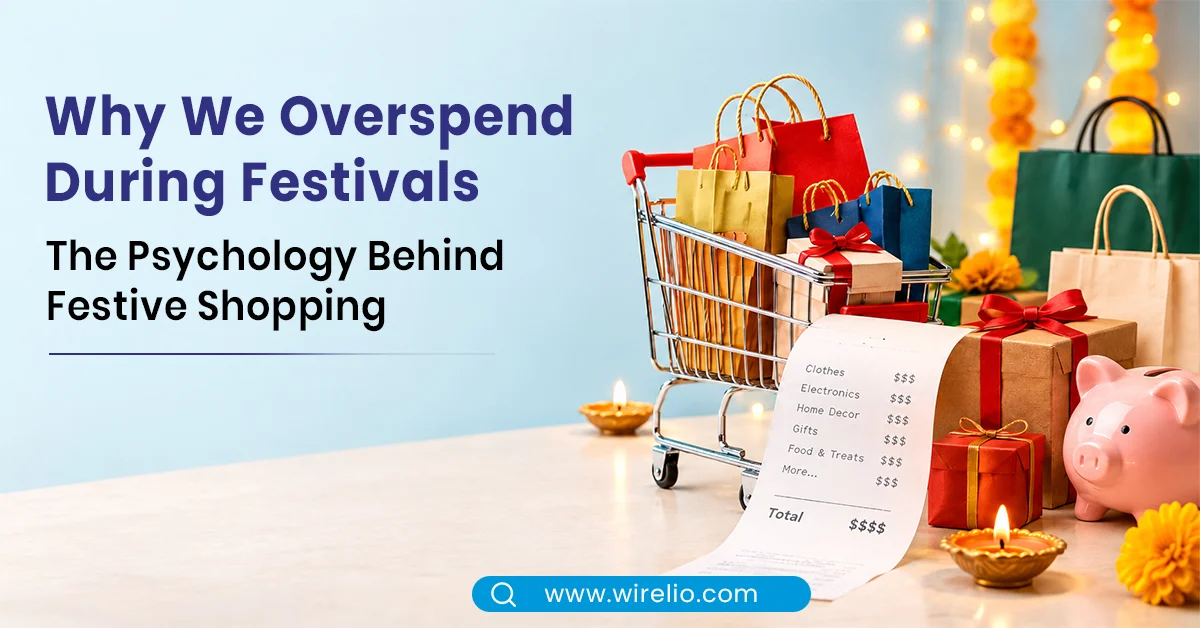

Festivals are meant to bring people together, create memories and make everyday life feel a little more special. Yet for many households, the excitement of the season can come with a familiar problem: spending more than planned. A new outfit leads to matching accessories, a discount on an appliance feels too good to miss, and a few extra gifts gradually stretch the budget.
Understanding Why We Overspend During Festivals is not simply about blaming poor money management. Shopping decisions are shaped by emotions, social expectations, advertising, convenience and the way choices are presented. During Diwali and other celebrations, these influences can combine at a time when people are already planning gifts, decorating their homes and preparing for family gatherings.
Festive spending is not inherently bad. Buying a thoughtful gift, replacing a necessary appliance or sharing a special meal can be meaningful. The challenge is recognising the difference between a purchase that reflects our priorities and one driven mainly by pressure, urgency or the fear of being left out.
1. Why Do We Spend More During Festivals?
Festivals attach emotional meaning to purchases. New clothes may represent a fresh start, gifts can express affection, and home decorations can make a celebration feel complete. Spending can therefore feel like part of participating in the occasion, rather than a purely financial decision.
That emotional connection is not necessarily negative. Problems arise when the expectation of making a festival special becomes linked to how much we buy or how expensive our choices appear. Someone who planned to purchase a few decorations may begin comparing their home with elaborate displays online and feel that their own preparations are inadequate.
There is also the effect of accumulated decisions. A single purchase may seem affordable, but several small expenses—sweets, clothing, gifts, dining out, decorations and delivery fees—can add up. Because these costs are spread across different shops and payment methods, it can be difficult to notice the total until bills arrive.
Festive routines can also make spending feel justified. A person may tell themselves that the occasion comes only once a year, that relatives deserve something special or that a purchase can be dealt with later. Such reasoning can make an individual expense feel reasonable even when the overall spending plan is no longer realistic.
The important distinction is between intentional spending and emotionally driven spending. Intentional spending begins with a purpose and an amount the household can afford. Emotion-driven spending often begins with a feeling—excitement, guilt, anxiety or the desire to keep up—and looks for a purchase to satisfy it.
Recognising that feeling creates an opportunity to pause without giving up the parts of the festival that matter.
2. How FOMO and Limited-Time Offers Influence Shopping Decisions
Fear of missing out, commonly known as FOMO, is the concern that other people are enjoying an opportunity that we might lose. In festive shopping, it can appear as a countdown clock, a “last chance” message, a limited-stock warning or a stream of posts showing products other people have bought.
These cues can make a decision feel more urgent than it really is. Instead of asking whether a product is useful or fairly priced, shoppers may focus on whether they can secure it before the offer disappears. The perceived cost of waiting starts to feel greater than the potential cost of buying something unnecessary.
Research has examined how scarcity messages influence online shopping. A 2022 study by Peter Broeder and Eileen Wentink, published in the International Review of Retail, Distribution & Consumer Research, investigated limited-time offers and perceived competition. Its findings suggest that scarcity notices can influence purchase intention through psychological mechanisms, but the effects were not uniform across the groups studied. This is a useful reminder that urgency can affect decisions without affecting every shopper in the same way. Read the study.
Not every countdown or low-stock message is misleading. Some offers genuinely expire, and popular products can sell out. The sensible response is to verify the terms rather than assume either that every warning is false or that every warning requires immediate action.
A practical way to counter FOMO is to decide in advance what would make a deal worth buying. Set a maximum price, identify the features you actually need and compare the final payable amount across sellers. If a purchase was not on your list, give yourself time to reconsider it.
Ask: Would I still want this product if the sale ended tomorrow? If the answer is no, the attraction may be the urgency rather than the product.
3. The Role of Social Media, Family and Social Pressure
Festive shopping rarely happens in isolation. Family traditions, workplace exchanges, neighbourhood celebrations and social media can all shape what people believe they should buy.
Photos of decorated homes, new electronics, expensive outfits and elaborate gifts provide a constant stream of comparisons. What appears online, however, is only a partial view of someone's life. A photograph does not show the person's income, savings, debt, priorities or the compromises made elsewhere to afford the purchase.
Social comparison can quietly change the standard people use to judge their own celebrations. A functional phone may suddenly feel outdated after seeing a new model repeatedly promoted. Simple decorations may seem insufficient when surrounded by elaborate home makeovers. A thoughtful, affordable gift can feel less impressive when others display costly presents.
Family expectations can add another layer. People may feel obliged to buy gifts for a long list of relatives, give children everything they request or spend beyond their means to avoid appearing ungenerous. In some households, exchanging gifts is an important tradition, and the aim should not be to dismiss that value. Instead, families can agree on practical limits before shopping begins.
Try discussing a gift budget, choosing a shared experience, organising a group present or focusing on a smaller number of meaningful items. If children are involved, explain that a budget is a way to plan choices rather than a punishment for wanting something.
Social media can also be used positively. Save decoration ideas, compare practical products and discover ways to reuse what you already own. The key is to treat inspiration as an option, not a standard you must match.
4. Why Discounts Can Trigger Impulse Buying
A discount changes how a purchase is presented. Instead of focusing only on the amount that will leave their account, shoppers may focus on the money they believe they are saving. An item marked down from a high reference price can appear attractive even when the final price is outside the household's budget.
Consider an illustrative example: a person sees a decorative item priced at ₹2,000 with a claimed 50% discount. They may think they are saving ₹1,000. But if the item was never needed, the transaction still costs ₹1,000. The discount reduces the price; it does not create a financial gain compared with buying nothing.
This is one reason impulse buying during festive sales can be difficult to control. The excitement of a bargain may briefly overshadow questions about usefulness, quality, affordability and whether a better option exists. Bundles and minimum-spend offers can intensify the effect by encouraging shoppers to add items to qualify for a reward.
Online interfaces may also use design tactics that influence choices. The US Federal Trade Commission's 2022 staff report, Bringing Dark Patterns to Light, describes practices including baseless countdown timers, false limited-time messages and misleading discount claims. These examples show why consumers should examine an offer rather than rely on urgency alone. Read the FTC report.
In India, the Central Consumer Protection Authority issued the Guidelines for Prevention and Regulation of Dark Patterns, 2023. The guidelines address deceptive interface practices that can mislead or manipulate consumer choices. They provide a relevant consumer-protection context for evaluating online shopping experiences, although the legality of any particular practice depends on the facts and applicable rules. Read the official guidelines.
Before buying, compare the final checkout price, including delivery and other charges. Check the product's specifications, warranty and return terms, and read the conditions attached to bank discounts or cashback. Cashback may have eligibility requirements or arrive later, so do not treat it as an immediate reduction unless the terms support that calculation.
A deal is useful when it helps you buy something you genuinely need or value at a price you can afford. It is not automatically a good decision simply because the discount percentage looks large.
5. How to Avoid Overspending and Shop More Consciously
The goal is not to remove enjoyment from festive shopping. It is to create enough space between an impulse and a purchase to make a decision that still feels right later.
A few practical habits can help:
Set a total budget first. Decide how much you can spend after essential bills, savings and other financial commitments. Split the amount into gifts, clothing, food, decorations and other relevant categories.
Make a list before browsing. Separate essential purchases from optional ones. This gives you a reference point when attractive products appear unexpectedly.
Use a waiting period. For non-essential purchases, leave the item in your cart or save it to a list and revisit it later. Expensive purchases may deserve a longer pause.
Compare the final price. Check comparable products across retailers and include shipping, installation, fees and payment conditions.
Set gift expectations early. Discuss affordable gift limits with family or friends where appropriate. A clear agreement can reduce pressure on everyone.
Limit promotional triggers. Turn off non-essential shopping notifications and unsubscribe from messages that repeatedly encourage you to buy.
Track small expenses. Record cash purchases, online orders and gifts in one place. Reviewing the total can reveal overspending before it becomes difficult to correct.
Avoid borrowing for appearances. Be cautious about using credit or instalment plans for discretionary purchases you cannot comfortably repay.
It can also help to identify the emotion behind a purchase. Are you buying because the item solves a problem, because you are excited, because someone else owns it or because you feel uncomfortable saying no? There is no need to judge yourself for the feeling. Simply naming it can make the decision clearer.
Frequently Asked Questions
1. Why do people overspend during festivals?
Festive spending can be influenced by emotional associations, family expectations, social comparison, urgency and the appeal of discounts. Small purchases can also accumulate when people do not track their total expenditure.
2. How can I avoid FOMO during festive sales?
Set a budget and shopping list before browsing, compare the final price and pause before buying unplanned items. Remember that missing a discount is not necessarily a loss if you did not need the product.
3. Are festive discounts always genuine savings?
No. A discount may reduce the price of a product, but the purchase is only useful if the item meets a real need or priority and fits your budget. Check the reference price, final checkout cost and offer conditions.
4. Is it wrong to spend more on gifts during festivals?
Not necessarily. Gifts can express care and support meaningful traditions. The important questions are whether the spending is affordable, freely chosen and consistent with your priorities—not whether the gift is expensive.
Conscious festive shopping is not about choosing the cheapest option every time or feeling guilty about every treat. It is about recognising when urgency, comparison or pressure is making the decision for you. When purchases reflect your values and your budget, you can enjoy the celebrations without turning a joyful occasion into a financial burden.

No comments posted yet. Be the first to express your thoughts!