

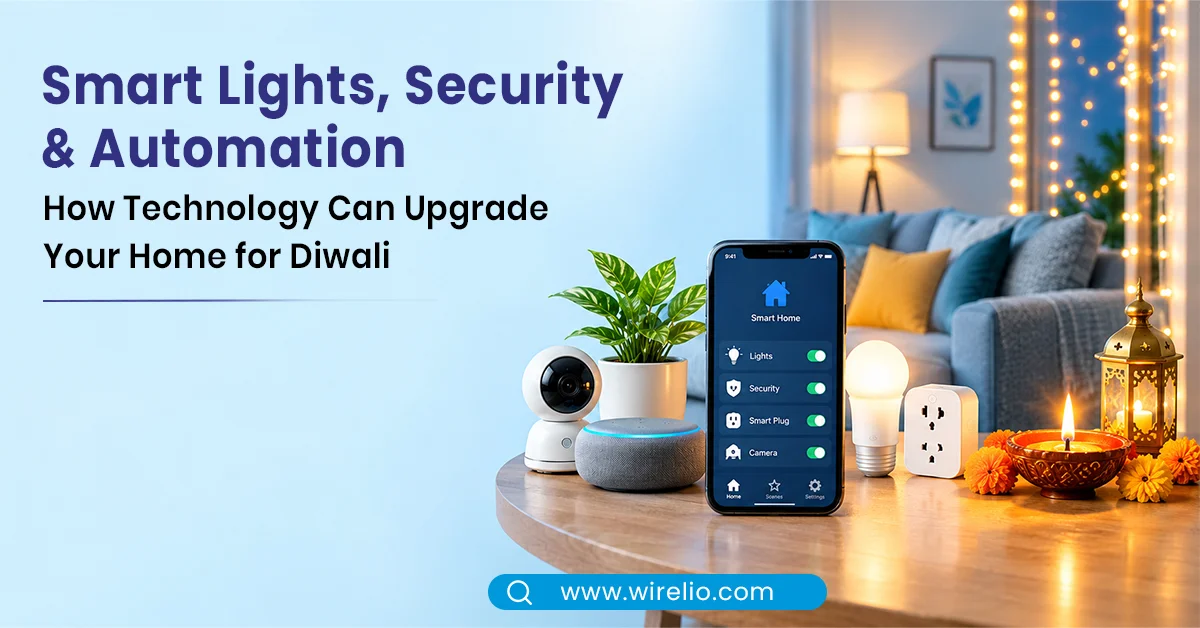

Diwali preparations often involve more than cleaning and decorating. Homes fill with guests, lights stay on for longer hours, deliveries arrive, and families may leave home to visit relatives. This makes the festive season a useful opportunity to consider whether technology can make everyday home management more convenient.
Smart Home Technology for Diwali can mean something as simple as controlling decorative lights from a phone or as extensive as connecting lighting, sensors, cameras and other devices through a common home automation system. Used thoughtfully, these tools can help residents manage festive lighting, check their entrance remotely and automate selected routines. But a smart home does not have to be expensive, complicated or fully connected to be useful.
For Indian homeowners and renters, the most practical approach is to start with a specific need, check compatibility and safety, and add devices gradually. Here is how smart lighting, security and automation can fit into a Diwali-ready home.
1. Smart Lights Can Make Festive Decoration More Flexible
Lighting is one of the most visible parts of Diwali decoration. Smart bulbs, compatible plugs, connected light strips and app-controlled lighting systems can make it easier to adjust the atmosphere without repeatedly switching individual lights on and off.
Depending on the product, smart lights for Diwali decoration may offer scheduling, dimming, colour changes, remote control or voice commands. A household might schedule decorative lights to turn on around sunset and switch off later at night. A compatible system could also group lights in different rooms, so a single command controls several fixtures.
Before buying, check what the product actually supports. Some smart bulbs require a Wi-Fi connection, while others use a separate hub or another wireless protocol. A smart plug only works with compatible loads and does not automatically make every connected appliance safe for remote operation.
Energy use also deserves attention. LED lighting is generally more energy-efficient than traditional incandescent lighting, as reflected in the Government of India's Bureau of Energy Efficiency standards and labelling programme. However, smart features do not automatically mean lower electricity bills. The outcome depends on the light's wattage, how long it operates, brightness settings and whether automation actually reduces unnecessary usage.
For a sensible festive setup, consider these steps:
Use LED lights from reputable sellers and check their electrical ratings.
Set schedules so decorative lights do not remain on all night unnecessarily.
Choose indoor or outdoor products according to their stated environmental rating.
Keep electrical connections away from water, oil lamps and other heat sources.
Avoid overloading sockets or joining multiple extension boards together.
Test timers and remote controls before guests arrive.
Traditional diyas and decorative lights can coexist with smart lighting. Keep open flames away from curtains, wiring, paper decorations and unattended areas. Automation should complement basic fire and electrical safety, not replace it.
2. Smart Security Cameras Can Help You Check Your Home Remotely
Diwali can involve shopping trips, family visits and travel. Smart security cameras, video doorbells, motion sensors and connected alarms may help residents monitor selected areas and receive alerts when activity is detected.
The right setup depends on the property. An apartment resident may prefer a video doorbell, if permitted, while a homeowner may consider a camera covering the entrance, driveway or other appropriate outdoor area. Renters should check their rental agreement and building rules before drilling, changing locks or installing equipment in shared spaces.
When comparing smart security cameras for home use, look beyond resolution and advertised features. Consider:
Field of view and night performance: Will the camera cover the intended area in the available lighting?
Storage: Does it support local storage, cloud recording or both? Are there subscription fees?
Connectivity: Does it work reliably with your home network, and what happens if the internet goes down?
Alerts: Can you adjust motion detection to reduce unnecessary notifications?
Power and installation: Does it require a nearby socket, a wired connection or regular battery charging?
Privacy controls: Can you restrict access, manage recordings and disable audio or recording when appropriate?
A camera is not a guarantee against theft, and it cannot replace sound locks, sensible travel precautions or emergency procedures. Treat it as one layer of a broader home-security plan.
Privacy matters just as much as image quality. Aim cameras at areas you are entitled to monitor, avoid capturing neighbours' private spaces where possible, and tell household members or visitors when recording is in use. Secure accounts with unique passwords and multi-factor authentication when available. Keep device firmware and mobile apps updated, and remove access for people who no longer need it.
India's Telecommunication Engineering Centre published the Code of Practice for Securing Consumer IoT, with Release 2.0 listed in November 2025. It covers consumer-connected products such as smart cameras, locks and home automation systems. In addition, the Ministry of Electronics and Information Technology announced CCTV security requirements in March 2026, including testing against vulnerabilities that could enable unauthorised remote access. Buyers should check the current requirements applicable to the particular product and intended use rather than assuming every device has the same certification status.
3. Home Automation Can Simplify Everyday Festive Routines
Home automation connects compatible devices so that selected actions happen through a schedule, command or trigger. For Diwali, that could mean turning on a group of lights at a set time, switching off selected devices before bedtime, or receiving an alert when a sensor detects movement.
The useful question is not how many devices you can connect, but which repetitive tasks are worth automating. A small system that reliably controls two or three lights may be more practical than a complicated setup that takes constant troubleshooting.
For smart home automation in India, check the basics before purchasing:
Wi-Fi coverage: Confirm that the intended room, entrance or outdoor area receives a reliable signal.
Voice assistant compatibility: Do not assume every device works with every smart speaker or mobile ecosystem.
Hub requirements: Some products need a separate controller or bridge, which adds cost and another component to maintain.
Power cuts: Decide what should happen when electricity or internet connectivity is interrupted. Do not assume all schedules will continue working offline.
Shared access: Make sure household members can use essential switches and controls without depending on one person's phone.
Future expansion: If you plan to add devices later, check whether the system supports the products and features you may want.
The Connectivity Standards Alliance describes Matter as a smart-home connectivity standard intended to improve interoperability among compatible devices and platforms. A Matter logo can be a useful starting point when comparing supported products, but it is not a guarantee that every feature works with every system. Check the specific device, controller and platform requirements before purchase.
Renters and first-time buyers can start with reversible options such as compatible plug-in lights or portable sensors. Homeowners planning permanent switches, wired cameras or smart locks may need a qualified installer and should confirm the electrical and structural requirements first.
4. Choose Energy-Efficient Devices Without Overspending
Festive technology can become an expensive project if every room receives new bulbs, cameras, speakers and connected plugs at once. A better strategy is to set a spending limit and prioritise devices that solve a real problem.
Start by comparing the complete cost rather than the promotional price. Include any hub, installation, memory card, cloud subscription, replacement battery or ongoing service fee. A low-cost camera with a recurring storage charge may cost more over time than a model with suitable local storage. Similarly, a smart bulb may not be worthwhile if your existing lighting already meets your needs.
Use this simple buying checklist:
Write down the problem you want to solve: festive lighting, entry monitoring, convenience or energy management.
Check whether an existing device or a simple timer can do the job.
Confirm product compatibility with your phone, router, wiring and chosen platform.
Read the privacy policy, warranty, return terms and software-update information.
Check seller credibility and any relevant safety or conformity requirements.
Test the device before the festival instead of leaving installation until the last evening.
For electrical products, follow the manufacturer's installation instructions and avoid improvising with exposed wires or unsuitable adapters. Smart plugs should not be used with appliances whose power requirements exceed the plug's rating. Devices that generate heat or require supervision should not be operated remotely unless the manufacturer explicitly supports that use and the setup is safe.
Energy-efficient smart home devices can help manage lighting schedules and reduce waste when used correctly, but savings vary. Compare wattage and expected usage, and remember that adding more connected devices can also add standby consumption.
5. Make Privacy and Reliability Part of Your Diwali Setup
Smart devices rely on software, accounts and networks, so a festive upgrade should include a short security check. Change default passwords, install available updates, enable multi-factor authentication where offered, and review who has access to camera feeds and automation controls. Avoid exposing devices directly to the internet unless the manufacturer and a knowledgeable installer provide a secure, necessary setup.
Also prepare for ordinary failures. Keep manual switches accessible, know how to disable an automation routine, and confirm whether security alerts still work during a Wi-Fi outage. If you are travelling, ask a trusted person to check on the property when appropriate rather than relying entirely on remote monitoring.
A smart home should remain usable by everyone who lives there. Make controls simple, label important switches and ensure older family members or guests know how to turn off lights and operate essential equipment. Convenience is only useful when the system is dependable and understandable.
Frequently Asked Questions
1. What smart home devices are useful for Diwali?
Smart bulbs, compatible plugs, scheduled lighting, video doorbells, security cameras and motion sensors can be useful, depending on the home. Start with the task you want to improve and check compatibility before buying.
2. Do smart lights reduce electricity bills?
Not automatically. LED lights can use less electricity than incandescent bulbs, and schedules may reduce unnecessary operating hours. Actual savings depend on wattage, usage patterns and how the devices are configured.
3. Are smart security cameras safe for home use?
They can be part of a home-security plan, but safety depends on device quality, secure setup, updates, account protection and appropriate camera placement. Check storage terms and privacy controls before purchase.
4. Can renters install smart home technology?
Many renters can use portable or plug-in devices, but permissions depend on the lease and building rules. Seek approval before making permanent wiring changes, drilling, installing smart locks or recording shared areas.
Smart Home Technology for Diwali works best when it makes a home safer, easier to manage or more comfortable without adding unnecessary expense. Start small, buy for compatibility rather than hype, and take privacy and electrical safety seriously. The most successful festive upgrade is not the home with the most gadgets; it is the one where technology quietly helps the celebrations run more smoothly.

No comments posted yet. Be the first to express your thoughts!