

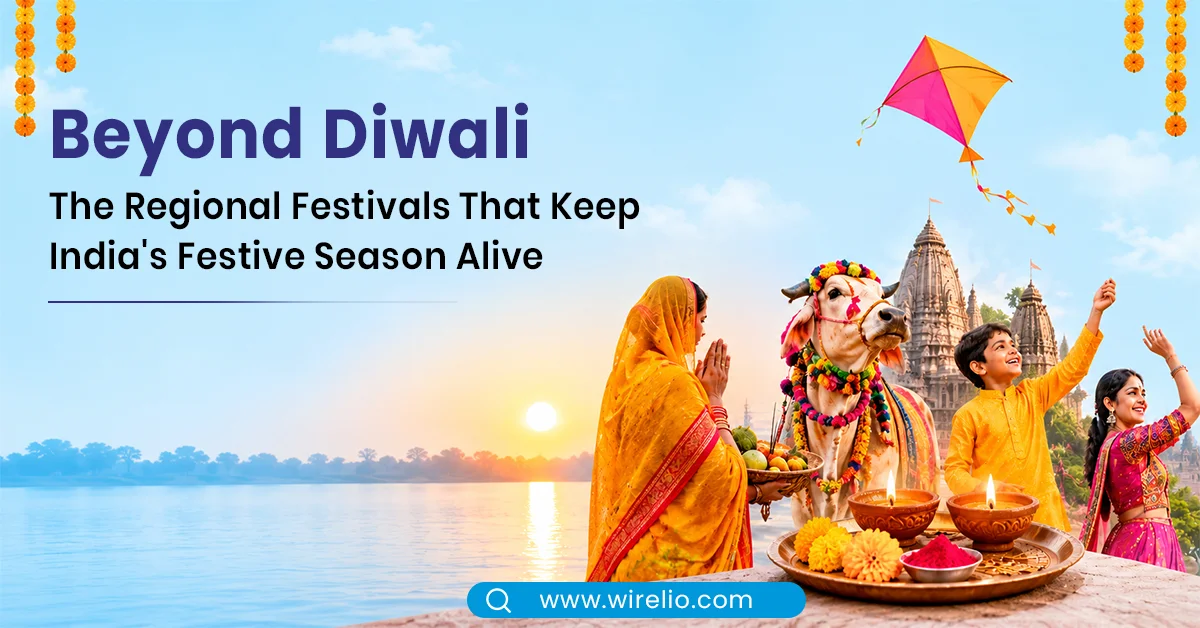

Diwali may dominate India's festive calendar in visibility, but it is not the final chapter of the season. Across the country, celebrations continue through November, bringing together families, neighbourhoods, temples, river communities and travellers. From food offerings associated with Govardhan Puja to the sunrise rituals of Chhath and the illuminated ghats of Dev Deepawali, the festivals after Diwali in India reveal how differently communities express faith, gratitude and togetherness.
The dates are linked to the Hindu lunar calendar, so the Gregorian calendar dates change from year to year. In 2026, Diwali falls on 8 November. Govardhan Puja is listed for 9 November, Bhai Dooj for 11 November, Chhath Puja observances run from 13 to 16 November, and Dev Deepawali in Varanasi is listed for 24 November. Local calendars and regional customs may affect the precise observance or ritual timings.
What makes this period particularly interesting is that there is no single way to celebrate. Some traditions centre on family relationships, others on nature and the harvest, while some transform public spaces into places of collective worship and cultural expression.
Govardhan Puja: Food, Nature and the Spirit of Sharing
Observed in many parts of North India, Govardhan Puja is associated with the story of Lord Krishna lifting Govardhan Hill to protect the people of Braj from heavy rain. The tradition is often understood as a reminder of the importance of nature, community and gratitude rather than dependence on displays of power.
A distinctive feature of the celebration is Annakut, a term commonly associated with a mountain-like offering of food. Devotees prepare a variety of dishes, arrange them as an offering at temples or homes, and later distribute the food as prasad. The spread can include grains, vegetables, sweets and milk-based preparations. The precise menu and presentation differ from one community to another.
In the Braj region, which includes Mathura, Vrindavan and nearby areas in Uttar Pradesh, the festival has a strong connection with Krishna traditions. Temples may organise special worship and food offerings, while devotees visit religious sites associated with the Govardhan story. In other parts of the country, the day may include worship of cattle, reflecting the importance of animals in traditional rural and agricultural life.
The community dimension is central to the festival. Preparing food, contributing ingredients, arranging offerings and sharing prasad turn a religious observance into a collective activity. It also creates a seasonal connection with local food traditions, where ingredients and dishes reflect regional tastes.
For visitors, the Braj region offers a cultural setting in which religious stories, temple practices, local markets and food traditions are closely connected. Anyone planning a visit should check temple schedules and local arrangements in advance, as crowd levels and access can vary.
Bhai Dooj: A Family Celebration with Regional Expressions
Bhai Dooj follows the main Diwali celebrations and places the relationship between brothers and sisters at the centre of the occasion. In many households, sisters perform aarti, apply a ceremonial tilak to their brothers and pray for their well-being. Brothers traditionally offer gifts or express their affection in return. Families often mark the occasion with a shared meal and sweets.
The festival is also known by different names and customs across India. In Maharashtra, it is celebrated as Bhau Beej or Bhav Bij. In West Bengal, the occasion is known as Bhai Phonta, where the tilak ritual has its own distinctive form. In parts of Bihar, it is associated with Yama Dwitiya and local stories and practices connected with the bond between siblings.
These regional differences are important. They show how a shared theme—family affection and the wish for a sibling's well-being—can be expressed through different rituals, foods and local beliefs. The ceremony may be intimate in one household and part of a larger family gathering in another.
Bhai Dooj also has a practical social dimension. In families where siblings live in different cities or countries, the festival can become a reason to travel home, arrange a family visit or reconnect through a call. The exchange of gifts may be visible, but the emotional centre of the occasion remains the relationship itself.
Chhath Puja: A Four-Day Celebration of the Sun, Water and Community
Among the most distinctive post-Diwali festivals is Chhath Puja, observed with particular significance in Bihar, eastern Uttar Pradesh and communities with roots in these regions. It is dedicated to the Sun and is notable for the worship offered to both the setting and the rising sun.
Chhath is not simply a single-day event. The observance traditionally unfolds over four days, with each stage carrying its own rituals:
Nahay Khay: Devotees begin with ritual bathing and preparations, while homes and cooking spaces are cleaned.
Kharna: A day-long fast is followed by an evening offering and a meal, commonly including preparations such as kheer.
Sandhya Arghya: Devotees gather near rivers, ponds and other water bodies to offer prayers to the setting sun.
Usha Arghya: Before sunrise on the final morning, offerings are made to the rising sun, after which devotees conclude their fast.
The offerings are an important part of Chhath's cultural identity. Thekua, seasonal fruits, sweets and other traditional items are arranged in baskets and carried to the water's edge. Folk songs, family participation and the sight of devotees standing in water during the arghya rituals create a powerful community atmosphere.
The festival also depends on shared public spaces. Riverbanks, ponds and neighbourhood water bodies become gathering points. Local residents, volunteers and civic authorities may work to prepare these places, manage crowds and support the arrangements. This makes safe access and the cleanliness of water bodies especially important during the festival.
Chhath has a strong connection with migration and homecoming too. People who have moved to Delhi, Mumbai, other Indian cities or overseas often return to their hometowns or join local community observances. In cities with large communities from Bihar and eastern Uttar Pradesh, public Chhath gatherings have become an important expression of cultural continuity.
For travellers, Chhath offers an opportunity to understand a tradition through its people, food and music. It should, however, be approached respectfully. Visitors should follow local instructions around ritual spaces, avoid obstructing devotees and seek permission before photographing individuals or private ceremonies.
Dev Deepawali: When Varanasi's Riverfront Becomes a Shared Celebration
The festive season reaches another striking moment with Dev Deepawali, celebrated on Kartik Purnima. In Varanasi, the occasion is associated with the belief that the gods descend to bathe in the Ganga. It is also linked with the story of Lord Shiva's victory over Tripurasura.
Unlike the household-centred celebrations of Bhai Dooj, Dev Deepawali is strongly identified with the city's public riverfront. The ghats are illuminated with earthen lamps, while prayers, Ganga Aarti, devotional music and cultural programmes contribute to the atmosphere. The lamps reflected on the river create an image that has become closely associated with Varanasi's cultural identity.
The festival also has a significant travel connection. Visitors arrive to experience the illuminated ghats, the riverfront and the city's historic lanes. A boat journey can offer a different view of the lamps, but the experience depends on local arrangements, river conditions, access rules and crowd management. Visitors should use authorised services and check official advisories before making plans.
For 2026, Uttar Pradesh Tourism lists Dev Deepawali in Varanasi on 24 November. Since the event attracts large numbers of visitors, accommodation and transport planning should be done early. Travellers should also remember that the ghats are places of worship and everyday community life, not merely a festival backdrop. Respectful behaviour, responsible photography and care for the river environment matter.
More Than Dates: What These Festivals Reveal About India's Cultural Diversity
Taken together, these celebrations show why India's festive calendar cannot be understood through one national template. Govardhan Puja brings attention to food offerings, Krishna traditions and the relationship between people and nature. Bhai Dooj highlights family bonds, while its regional names and rituals reflect local cultural histories. Chhath connects devotion with the sun, water, discipline and collective participation. Dev Deepawali brings a city's religious heritage into a large public celebration.
Food is one of the threads connecting these occasions. Annakut offerings, kheer and thekua, regional sweets and family meals are not incidental details. They help carry traditions from one generation to the next. Recipes, ingredients and methods of preparation often become part of a family's memory of a festival.
Travel is another important connection. The festive calendar can encourage people to return to ancestral towns, visit religious centres or explore places known for particular traditions. Such journeys can support local transport, accommodation, markets, food vendors and small businesses. At the same time, increased visitor numbers make planning, public safety, sanitation and environmental responsibility essential.
For anyone exploring festivals after Diwali in India, the most rewarding approach is to look beyond the spectacle. Learn why a ritual matters to the community, understand local etiquette, try regional food where appropriate and allow the people who celebrate the festival to remain at its centre.
FAQs
1. Which festivals are celebrated in India after Diwali in 2026?
Key observances include Govardhan Puja on 9 November, Bhai Dooj on 11 November, Chhath Puja from 13–16 November and Dev Deepawali in Varanasi on 24 November 2026. Dates should be checked against local calendars before travel or participation.
2. Why is Chhath Puja considered distinctive?
Chhath Puja is a four-day observance dedicated to the Sun. One of its best-known features is the offering of arghya to both the setting sun and the rising sun, often at rivers or other water bodies.
3. Are Govardhan Puja and Annakut the same celebration?
They are closely connected. Govardhan Puja commemorates the Govardhan story associated with Lord Krishna, while Annakut refers to the large food offering prepared in many temples and communities as part of the observance.
4. Where is Dev Deepawali most widely associated with?
Dev Deepawali is especially associated with Varanasi in Uttar Pradesh, where the ghats along the Ganga are illuminated with earthen lamps and the city hosts prayers and cultural programmes on Kartik Purnima.
India's festive season is not defined by one night or one style of celebration. It continues through family rituals, shared meals, riverbank prayers and city-wide gatherings, each shaped by local history and community life. Looking beyond Diwali offers a richer understanding of the country: its traditions are connected, but never identical, and their diversity is what keeps the festive calendar alive.

No comments posted yet. Be the first to express your thoughts!