

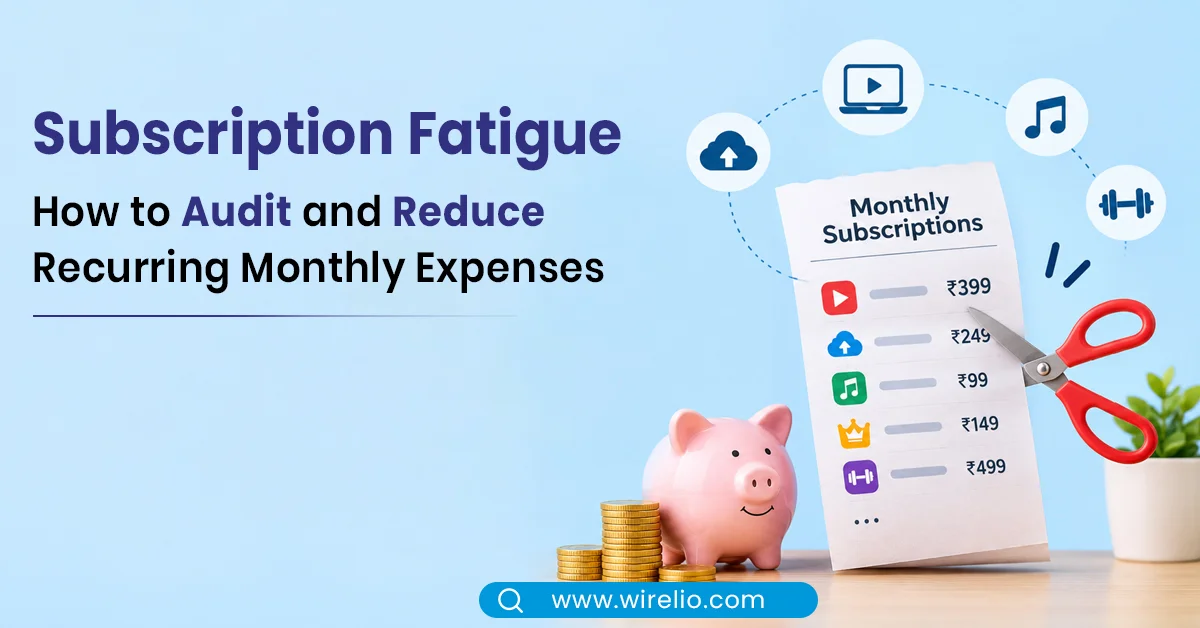

Subscriptions have made everyday services easier to access. From entertainment platforms and music apps to cloud storage, online learning, food memberships, fitness applications and software tools, consumers can now pay for almost everything through a monthly or annual plan. The convenience, however, comes with a less obvious financial cost: an increasing number of small, recurring payments that can quietly become a significant household expense.
This growing problem is often described as subscription fatigue. It occurs when consumers find themselves managing too many subscriptions, paying for services they rarely use, or struggling to keep track of multiple renewal dates and payment commitments.
The challenge is not necessarily that every subscription is expensive. It is that several individually affordable services can collectively put pressure on a monthly budget. A streaming platform here, a premium mobile application there, an unused cloud storage plan and an automatically renewed membership can gradually turn into a substantial recurring expense.
As digital services expand across countries and industries, understanding where subscription money goes has become an important part of personal financial management. A systematic subscription audit can help consumers identify unnecessary payments, eliminate overlapping services and regain control over recurring expenses without giving up the services they genuinely value.
What Is Subscription Fatigue and Why Are Recurring Payments Increasing?
Subscription fatigue describes the financial and practical burden of managing numerous paid services at the same time. It is not limited to entertainment platforms. Consumers may have subscriptions for music, gaming, news publications, cloud storage, productivity software, shopping memberships, fitness programmes, educational platforms and even household essentials.
The subscription model is attractive to businesses because it creates predictable recurring revenue. For consumers, it offers access to services without necessarily paying a large upfront amount. However, the same arrangement can make spending less visible.
Unlike a major purchase, a small monthly debit may not attract much attention. When several services charge independently, consumers may lose track of the total amount being spent.
There are several reasons this problem is becoming more noticeable:
Free trials converting into paid plans: A service may begin with a complimentary trial and automatically start charging when the trial period ends.
Automatic renewals: Monthly and annual plans can continue renewing even when consumers have stopped using the service.
Multiple platforms offering similar content: Entertainment, music, news and learning services frequently compete for the same audience.
Bundled subscriptions: Mobile plans, broadband packages, bank accounts and shopping memberships may include additional services that consumers do not actively use.
Small recurring charges: Low individual prices can make subscriptions appear insignificant, even when their combined cost is substantial.
Multiple payment channels: Subscriptions may be billed through app stores, websites, credit cards, digital wallets, UPI mandates or bank accounts.
The result is a spending pattern in which consumers may know what they pay for their major household expenses but have a less accurate picture of their smaller digital commitments.
How to Conduct a Subscription Audit and Find Unnecessary Expenses
The first step towards reducing subscription fatigue is understanding exactly where recurring payments are going. Rather than immediately cancelling services, consumers should begin with a complete inventory of their subscriptions.
A practical audit can be completed in four stages.
1. Review Bank Statements and Payment Histories
Start by examining the previous three to six months of bank statements, credit card statements and digital payment histories. Look for transactions that repeat monthly, quarterly or annually.
Search for payment descriptions associated with:
Streaming and entertainment platforms.
Music and podcast applications.
Cloud storage and backup services.
News and digital magazine subscriptions.
Shopping and delivery memberships.
Gaming services and in-app purchases.
Fitness, meditation and wellness applications.
Productivity, design and business software.
Online courses and educational platforms.
Do not rely exclusively on the transaction description. Some subscriptions appear under the name of a payment processor, app store or billing intermediary rather than the actual service provider.
Also check email inboxes for words such as subscription, renewal, payment successful, invoice, free trial and membership. Digital receipts can help identify services that are missing from a bank statement review.
2. Create a Subscription Inventory
Once the payments have been identified, prepare a simple spreadsheet or list containing the following information:
| Detail | What to record |
|---|---|
| Service name | Name of the platform or provider |
| Billing amount | Actual amount charged |
| Billing frequency | Monthly, quarterly or annually |
| Payment method | Card, UPI, wallet or bank debit |
| Renewal date | Next expected billing date |
| Last used | Most recent date of actual use |
| Purpose | Entertainment, work, storage, learning, etc. |
| Decision | Keep, cancel, pause or review |
Calculate the annual cost of each subscription. A service costing ₹199 per month, for example, amounts to ₹2,388 over a year. A ₹999 annual subscription may appear more expensive at first but could offer better value if it is regularly used.
For international readers, the same calculation can be performed in their local currency. The objective is to understand the total financial commitment rather than compare subscription prices across countries.
3. Identify Unused and Overlapping Services
The next stage is to assess whether each subscription provides enough value to justify its cost.
Ask three simple questions:
Have I used this service during the past 30–60 days?
Do I already have another subscription that provides a similar service?
Would I willingly purchase this service again today at its current price?
For example, someone paying for three entertainment platforms may discover that only one is used regularly. A household may have separate cloud storage subscriptions for different family members when a shared plan would be sufficient. Similarly, a person may pay for multiple productivity applications with overlapping features.
However, overlapping services are not automatically wasteful. Different platforms may offer exclusive content, specific professional features or better functionality. The decision should be based on actual usage and personal requirements.
4. Check Renewal Dates and Price Changes
An annual subscription can be particularly easy to overlook because the payment happens only once a year.
Review renewal notifications and previous invoices to identify:
Upcoming annual renewals.
Free trials approaching their expiry dates.
Promotional prices that have ended.
Changes in monthly or annual charges.
Plans that automatically upgraded after a trial.
Family or multi-user plans with unused capacity.
Record important renewal dates in a calendar and set reminders several days before the payment is due. This gives you time to review the service rather than making a rushed decision after the money has been deducted.
Practical Ways to Reduce Monthly Subscription Expenses
A subscription audit is useful only when it leads to better spending decisions. The objective should not be to cancel everything but to retain services that offer genuine value while removing unnecessary commitments.
Cancel Services That Are No Longer Useful
Begin with subscriptions that have not been used for several months and are unlikely to be needed again soon. Cancel them directly through the service provider or the platform through which the subscription was purchased.
Importantly, uninstalling an application does not necessarily cancel its paid subscription. Google Play specifically advises users that removing an app from their device does not stop its subscription. Consumers must complete the cancellation process through the appropriate billing channel.
For subscriptions billed through Apple, Google Play or another intermediary, check the relevant account's subscription management section. If the subscription was purchased directly from a company's website, cancellation may need to be completed there.
After cancelling, retain the confirmation email or screenshot and check the next statement to ensure that billing has stopped.
Rotate Entertainment Subscriptions
Not every entertainment service needs to remain active throughout the year.
Instead of maintaining several streaming subscriptions simultaneously, consumers can consider rotating platforms according to their viewing preferences. One service can be used for a month or two, followed by another when a particular programme, film collection or sporting event becomes available.
The same approach may work for gaming services, digital magazines and selected online learning platforms.
Before switching, check whether cancellation results in immediate loss of access or whether the service remains available until the end of the paid billing period. Also review any minimum commitment or cancellation conditions.
Choose the Right Plan and Avoid Unnecessary Upgrades
Many subscription services offer multiple tiers, ranging from basic access to premium packages with additional features.
Consumers should evaluate whether they actually need the more expensive plan. For example:
A basic cloud storage plan may be sufficient for personal documents and photographs.
An individual entertainment plan may be enough for someone who does not share an account.
A free productivity tool may meet the needs of occasional users.
A lower-tier fitness application may provide all the required workout features.
Annual plans can sometimes reduce the effective monthly cost, but paying for a year upfront is not automatically a saving. It makes sense only when the service is likely to remain useful for the full period and the terms are acceptable.
Review Family Plans, Bundles and Shared Memberships
Family plans and bundled subscriptions can reduce the cost per person, provided the available features are genuinely used.
Households should review whether multiple members are paying separately for services that offer legitimate family or household packages. They should also examine mobile and broadband plans that include entertainment, security or cloud storage benefits.
However, bundled services should not be treated as free simply because they are included in another package. Consider the total package price, whether the additional benefits are actually used and whether a cheaper standalone plan would meet the household's needs.
Always follow the provider's account-sharing and household eligibility rules.
Set a Monthly Subscription Budget
A dedicated subscription budget makes recurring expenses easier to monitor.
For example, a household could decide to allocate a fixed amount each month towards entertainment, software, learning and other digital services. The appropriate amount will depend on income, priorities and essential household expenses.
Separate subscriptions into three groups:
Essential: Services needed for work, education, communication or important personal requirements.
Useful: Services that provide regular convenience, entertainment or learning value.
Optional: Services used occasionally or offering benefits that are easily available elsewhere.
Review the optional category first whenever the monthly budget becomes tight.
Renewal Traps, Payment Controls and Consumer Protection Across Countries
Subscription management is not only about spending less. Consumers also need to understand how automatic payments work and what steps are available when a cancellation request is not honoured.
Free trials deserve particular attention. Some offers require payment details at registration and automatically convert into paid subscriptions after the trial period. Others renew at a higher price once an introductory discount expires.
Before accepting an offer, check the trial's end date, the amount payable after the trial, the billing frequency and the cancellation procedure. Save a copy of the original offer and its terms.
Payment controls can provide an additional layer of protection, but they should not replace proper cancellation.
What Indian Consumers Should Know
In India, recurring digital payments may be processed through cards, UPI, prepaid payment instruments and other permitted payment arrangements.
The Reserve Bank of India has established an e-mandate framework for recurring transactions. Its consolidated directions issued in April 2026 updated the framework governing recurring domestic and cross-border payments, including applicable authentication and transaction-notification requirements.
Consumers should understand that an approved recurring payment mandate is different from a subscription contract with a service provider. Cancelling a payment mandate may prevent future automatic debits, but it does not necessarily terminate the underlying service agreement or settle any outstanding contractual obligation.
Before withdrawing a mandate, check the provider's cancellation procedure and any remaining payment obligations. Also review available mandate-management and transaction-dispute facilities through the relevant bank or payment application.
What Consumers in Other Countries Should Check
Consumer rights and recurring payment rules differ between jurisdictions.
In the United States, the Federal Trade Commission (FTC) provides consumer guidance on free trials, automatic renewals and unwanted subscriptions. It recommends keeping records of cancellation requests and checking account statements for further charges.
In the United Kingdom, the Financial Conduct Authority (FCA) explains how recurring card payments, also known as continuous payment authorities, work and what consumers can do if a business continues charging after cancellation. The UK government also published subscription-contract guidance in October 2026 explaining the consumer and business requirements under the country's subscription rules.
These protections are jurisdiction-specific. Consumers in other countries should check their national consumer protection authority, financial regulator and payment provider for applicable cancellation and dispute procedures.
If a company continues charging after a valid cancellation, contact the provider in writing, retain the evidence and approach the bank or card issuer through its official dispute process where appropriate. Do not assume that blocking a card or stopping a mandate automatically cancels the service contract.
FAQs About Subscription Fatigue and Recurring Payments
1. What is subscription fatigue?
Subscription fatigue is the financial and practical burden of managing too many paid services. It can result in unnecessary spending, overlapping subscriptions, forgotten renewals and difficulty keeping track of recurring monthly expenses.
2. How often should I conduct a subscription audit?
A monthly review of recurring transactions is useful, while a more detailed audit every three months can help identify unused services, price changes and overlapping plans. Annual subscriptions should also be reviewed before their renewal dates.
3. Does uninstalling an application cancel its subscription?
No. Removing an application from a phone or computer does not necessarily stop recurring billing. The subscription must generally be cancelled through the provider, app store or billing platform that manages the payment.
4. Is cancelling an automatic payment mandate the same as cancelling a subscription?
No. A payment mandate authorises recurring transactions, whereas a subscription is an agreement with the service provider. Stopping the mandate may prevent future automatic debits, but the service contract or outstanding obligations may continue. Consumers should follow the provider's cancellation procedure as well.
Conclusion: Make Subscription Spending a Conscious Financial Decision
Subscription fatigue is not simply a problem of having too many applications. It reflects how easily recurring expenses can become disconnected from actual usage and changing household priorities.
A service that was useful six months ago may no longer justify its monthly cost. An annual renewal may go unnoticed, while several small payments can collectively consume money that could be directed towards savings, essential expenses or more meaningful purchases.
The solution is a regular, straightforward review of bank statements, payment mandates, renewal dates and actual service usage. Cancel what is unnecessary, compare overlapping plans, avoid upgrades that offer little additional value and retain subscriptions that genuinely support everyday life.
Ultimately, the goal is not to live without digital services. It is to make sure that every recurring payment has a clear purpose. A little attention to subscription spending today can create better financial control and a healthier monthly budget over time.

No comments posted yet. Be the first to express your thoughts!