

 Automobile
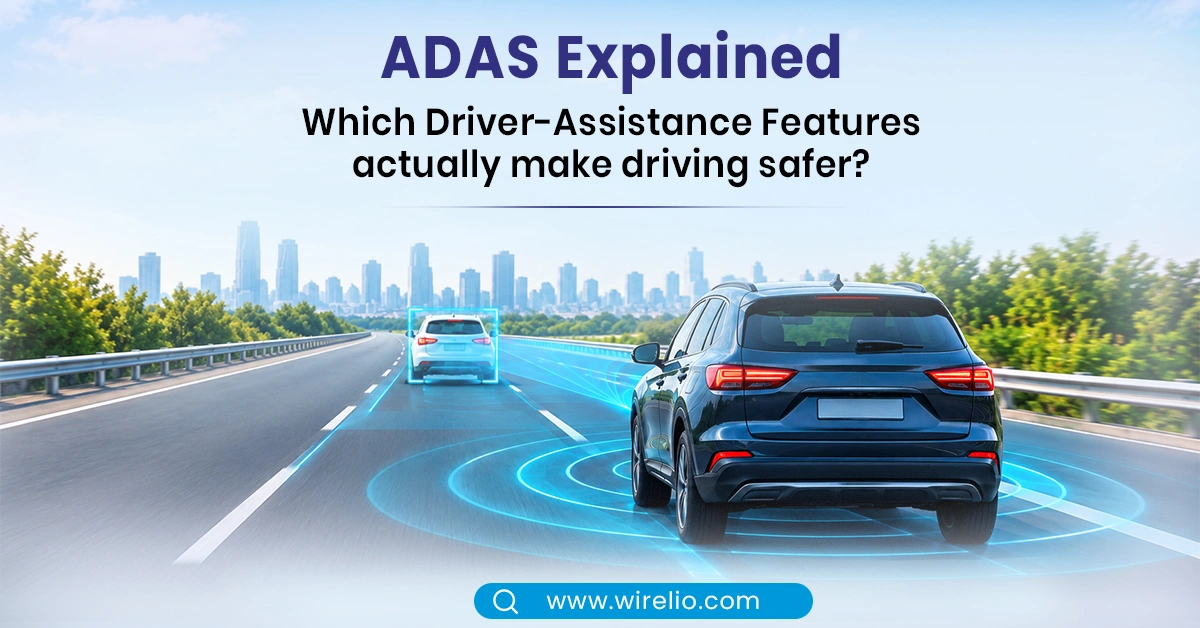
ADAS Explained: Which Driver-Assistance Features Actually Make Driving Safer?
Explore how Advanced Driver-Assistance Systems (ADAS) work, key features like AEB and Blind-Spot Monitoring, their real-world limitations, and how they enhance driving safety.
Modern cars are becoming more intelligent. Features previously exclusive to luxury cars are being introduced to more everyday cars. This includes ADAS (Advanced Driver Assistance Systems).
With terms like 'lane assist', 'adaptive cruise control', 'automatic emergency braking' and 'blind-spot monitoring' on brochures, it can be confusing when trying to understand what they do.
ADAS, as a term, usually refers to a group of technologies which help the driver, prevent accidents and generally assist in making driving less of a hassle; these systems of course are not a replacement for an alert driver.
So what ADAS features are actually helpful for everyday driving? Let's look at the basics.
What Is ADAS?
Advanced Driver Assistance Systems (ADAS) uses cameras, radar, sensors, or a combination of these to monitor the vehicle's surroundings and assist the driver.
Depending on the car, ADAS can warn you of dangers, keep you a safe distance from other vehicles, or even 'apply brakes' in certain conditions.
ADAS should be thought of as an added precaution while driving. The driver still holds responsibility over controlling the vehicle.
1. Automatic Emergency Braking
Automatic Emergency Braking (AEB) is one of the more safety-focused ADAS features.
The system monitors the road ahead and can detect certain impending collisions. If the system determines the car is in danger of hitting an object or vehicle and fails to react, AEB can notify the driver and, depending on the vehicle, could even apply brakes.
Why is it useful?
Automatic emergency braking can be of great assistance if:
- The car does not notice that a vehicle is slowing
- The driver fails to react fast enough to an obstacle
- The driver is distracted momentarily
- The vehicle needs an extra braking power in an emergency
Its effectiveness depends on the vehicle, sensors, road conditions and the types of objects it is programmed to detect.
2. Forward Collision Warning
Forward Collision Warning (FCW) works on similar principles to AEB, but mostly focuses on notifying the driver.
If a potential collision is sensed, a warning can appear visually, audibly, or otherwise. If a driver is on a highway and traffic suddenly slows ahead without realising, the warning can give an extra push to get the driver to slow down.
Why is it useful?
It can give the driver an extra second to react to a potential hazard.
When combined with AEB, FCW can provide both warnings and extra braking assistance in conditions both systems are able to detect.
3. Lane Departure Warning
It is not uncommon for even an alert driver to fall slightly off the road while on long drives. Lane Departure Warning (LDW) is a feature designed to alert drivers when they begin to stray from their lanes.
Warnings can appear in the form of: A visual alert, an audible warning, vibration from the steering wheel
LDW, as a rule, is meant to prevent unexpected lane deviations, not to constantly control the vehicle.
Why can it help?
It can be useful to both prevent accidents on highways and to prevent momentary distractions from making the vehicle veer off the road. However, there must be visible lane markings for it to work.
4. Lane Keep Assist
Lane Keep Assist (LKA) builds upon the ideas of LDW.
Rather than simply warning the driver, the system can provide steering assistance if the vehicle unintentionally begins to leave its lane.
It must be noted that LKA does not mean the car can safely drive itself; the driver must keep hands on the wheel and remain aware of traffic conditions.
Why is it useful?
Lane Keep Assist can provide a helpful push if the car veers off the road, and is particularly useful in conjunction with other driver-assistance technologies.
5. Adaptive Cruise Control
Cruise control provides a constant speed, but Adaptive Cruise Control (ACC) goes one step further.
ACC can slow the vehicle to maintain a safe following distance to vehicles ahead, within the system's operational limits.
For example: If an ACC-equipped vehicle is set to 90 km/h, encounters a slower vehicle, it can slow itself to match the slower vehicle's speed, and then accelerate back up to 90 km/h when the road ahead clears.
Why can it make driving easier?
Adaptive Cruise Control can reduce the time spent accelerating and breaking on longer drives.
It can be especially useful in relatively steady highway traffic.
However, drivers should not consider ACC as a replacement for watching the road ahead.
6. Blind-Spot Monitoring
Mirrors cannot give an all-seeing view of the area around your vehicle, which is why Blind-Spot Monitoring uses sensors to detect vehicles in blind spots.
If a vehicle is detected in a blind spot, the driver can be notified, usually through an indicator on the side mirror.
Why is it useful?
It can be particularly useful for:
Changing lanes
Driving on multi-lane roads
Overtaking
Dealing with motorcycles or vehicles pulling out
The driver should always check mirrors and surroundings before attempting to change lanes.
7. Rear Cross-Traffic Alert
Pulling out of a parking space can be difficult, especially with vehicles, pedestrians, or other objects coming from either side.
Rear Cross-Traffic Alert (RCTA), which detects incoming vehicles or objects, can assist the driver in determining a safe time to pull out.
Why is it useful?
It can provide extra awareness if the driver's vision is obstructed, such as in crowded parking lots, shopping-centre parking areas, narrow driveways or places where vehicles block the view of other vehicles
It serves as an extra warning system, not a replacement for checking one's surroundings.
8. Driver Monitoring
Some newer vehicles can use cameras or sensors to monitor the driver.
Depending on the system, Driver Monitoring Systems can watch for signs that the driver is not paying sufficient attention or is falling asleep, and can provide a warning for the driver to refocus.
Why does it matter?
Many causes of driving-related incidents stem from a lack of attentiveness rather than technical driving skills. A system which encourages a distracted or sleeping driver to pay attention can provide an extra layer of safety.
Features such as Automatic Emergency Braking, Forward Collision Warning, Blind-Spot Monitoring and Lane Departure/Lane Keep assistance address common driving situations and can provide useful additional warnings or assistance. However, the usefulness of any system depends on its design, calibration and the driver's use of it.
Does ADAS Mean the Car Can Drive Itself?
No.
This is one of the most important things to understand about ADAS; driver-assistance features are meant to help with specific tasks. Even if a vehicle can accelerate, brake or steer itself under certain conditions, the driver may still need to pay attention to the road.
ADAS should not be thought of as permission to ignore the road.
Why ADAS Doesn't Always Work Perfectly?
ADAS relies on cameras, radar and other sensors, meaning environmental factors can affect its performance.
For example, systems can have issues in:
Heavy rainfall
Fog or poor visibility
Dirty or obstructed sensors
Faded or missing lane markings
Strong glare
Unusual layouts
or when objects are not what the system is programmed to look for
This is why it is important that the driver understands the limitations of the ADAS system in their vehicle.
ADAS Is an Extra Layer of Safety
The greatest strength of ADAS is its ability to provide an extra layer of assistance. A driver could miss a vehicle slowing down ahead, veer off the road, or fail to see a vehicle in their blind spot. Depending on the situation, an ADAS feature may be able to detect and warn the driver of these threats.
However, safe driving still starts with the basics:
Keeping eyes on the road
Following rules of the road
Maintaining a safe following distance
Avoiding using a phone while driving
Not driving when excessively tired
and understanding your vehicle's ADAS features and limitations
Final Thoughts
ADAS can make driving safer by assisting drivers in detecting potential hazards, maintaining awareness and reacting to certain situations. Features such as automatic emergency braking, forward collision warning, blind-spot monitoring, lane assistance, and adaptive cruise control can all serve useful purposes, but none removes the need for an attentive driver. The best way to think about ADAS is simple: it is there to assist you, not replace you. As these technologies become more common in everyday cars, understanding what each feature does can help drivers using them to get the most safety benefit from the technology already built into their vehicles.

Shivanshu (Editor-in-Chief)
Content Author and Editor at Wirelio.
 Automobile


No comments posted yet. Be the first to express your thoughts!