


A child may video-call a relative overseas within seconds.
Parents may order groceries using a phone, track the bus journey online, work from home, have finances at their fingertips and read the news in moments.
Family life is utterly transformed within just a few decades.
In a generation built around speed, convenience and constant connectivity, what can families still learn from grandparents?
A great deal.
Grandparents may retain something younger generations cannot download, search or automate: lived experience. They've seen technology change, careers rise and fall, families grow, cities expand, relationships develop, traditions evolve and even periods of darkness eventually pass.
Not every older idea fits with modern life.
Not every new idea should be rebuffed simply for being different.
But through generations listening to each other rather than dismissing each other, families can learn something from everyone.
Here are some of the lessons that grandparents can still teach the younger generations in this new age of technology.
Not everything needs to happen immediately.
Modern life rewards speed.
Fast delivery.
Instant replies.
Short videos.
One-click payments.
Real-time updates.
Even patience feels increasingly inefficient but our grandparents learned to live with waiting.
Letters took days.
Photographs had to be developed.
Purchases taken more seriously.
Repairs valued over replacements.
Major decisions were made over drawn-out conversations, rather than knee-jerk reactions. That's not to say slow was always better.
But there is wisdom in recognising that not every important thing becomes better because it happens faster.
Relationships need time.
Skills need practice.
Trust needs to develop.
Children don't grow according to a timeline.
Grief doesn't vanish because life moves on.
Some decisions are better left to sleep on.
The Lesson:Technology can save time. It cannot dictate what deserves time.
Families are built on repetition, not occasions.
Modern families live in events.
A birthday.
A holiday.
A vacation.
An anniversary.
A festival.
Holidays matter.
But many grandparents learn that family closeness is more often built upon much smaller repetitions.
Tea together.
Sunday lunch.
A phone call.
A familiar recipe.
A repeated story.
A visit made just for the sake of it.
Asking if another person reached their destination safely.
Remembering smaller things about somebody's life and enjoying them. None of these are big enough for social media, but together, they create a sense of belonging.
The Modern Challenge
Digital communication means families can stay in touch from oceans apart. But being constantly contactable is not the same thing as being connected.
They know that dark times usually pass. Older people can offer the gift of perspective because generally problems at 20 may not look much like it will at 60.
But at 20, it often seems permanent. Problems seem like they will not end and sorrow seems permanant, but at a wise age, when life has been lived, these same problems seem much smaller.
Our grandparents have experienced financial uncertainty, career setbacks, illness in families, relocations, bereavement, social upheaval and personal disappointment. They know life rarely goes in a straight line.
This doesn't mean our grandparent has all the answers.
But they may have something more valuable: a long-term view.
When younger family members are blindsided by an exam, failed interview, financial setback or relationship difficulty, an elder may be able to advise us better since they have all experienced such situations.
The Lesson:Today's problem deserves your attention. But it is not an indicator for the future.
Their stories are a family archive.
Every family has a history.
Where did the family live before this city?
What work did earlier generations do?
Why does a particular tradition exist?
Who decided on names?
What happened in a difficult year?
Which relative was famous for something nobody remembers?
Much of this history may be found only in someone's head. Our grandparents can act as living archives. Yet families are often only too late in recognising the value of those stories.
Technology provides us the opportunity that previous generations didn't have.
Record conversations.
Digitise photographs.
Save recipes.
Write down family histories.
Ask your grandparents to identify the people in old photographs. Just sitting together with them can be one of the best conversations that you remember since the things they will tell you will make you fondly remininse the past.
They can teach the difference between value and price.
Many older generations learned to adopt a different approach with possessions. Clothes were repaired. Furniture maintained. Appliances expected to last. Food waste avoided. Purchases considered.
Part of this was due to necessity. Modern life has improved our quality of life tremendously. But the older instinct to make things last has proven unexpectedly relevant in a world now preoccupied with waste, sustainability and excess.
Our grandparent asking "What's wrong with the one you already have?" may sound old-fashioned.
Sometimes, it is, but sometimes, it's an excellent question.
The Lesson:New doesn't always mean necessary. Cheap doesn't always equal value.
Grandparents can offer children something parents sometimes can't.
Parenting comes with great responsibility.
School schedules.
Homework.
Discipline.
Appointments.
Meals.
Deadlines.
Safety.
The future.
Grandparents can occupy a different role.
They can sometimes listen, without immediately solving. They can tell stories, without transforming them into lessons. They can offer perspective, without micromanaging.
Children may share something with a grandparent they would avoid telling a parent. There are many children who are very connected to their grandparents and that makes them more confident since they have been loved.
Research into intergenerational family relationships has long since established that meaningful connections between grandparents and grandchildren can support family cohesion and emotional wellbeing - though the nature of these relationships can vary greatly across families and cultures.
The younger generations can teach lessons to grandparents too.
Intergenerational learning isn't one-sided.
Grandparents can teach resilience, family history and patience.
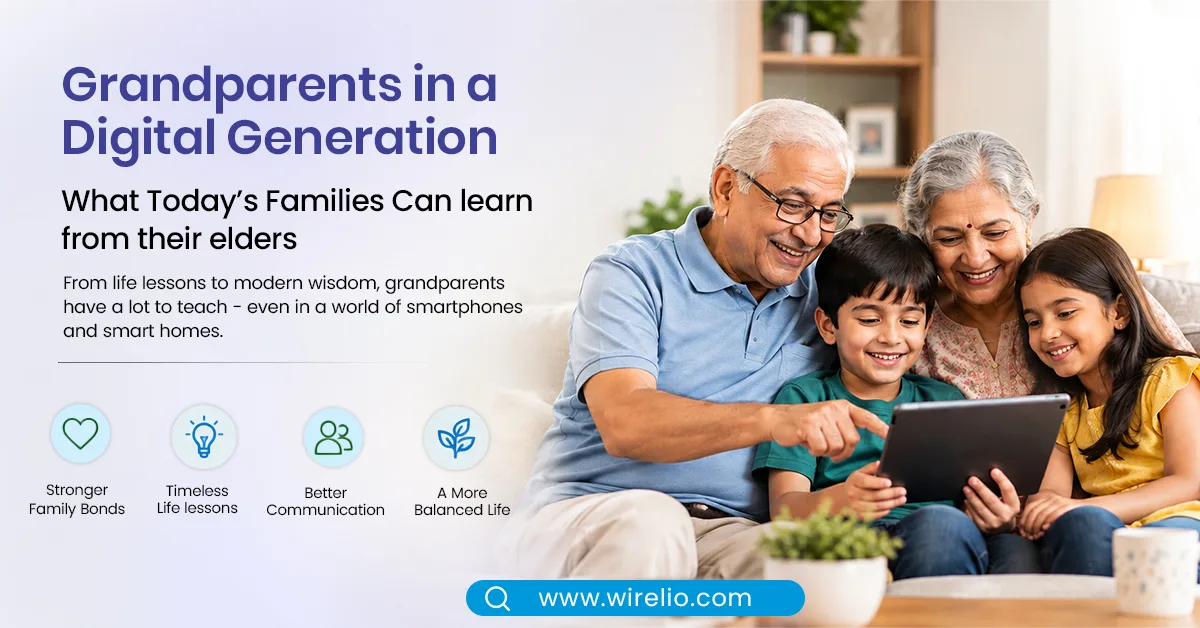
Grandchildren may teach digital confidence.
How to video call.
How to use digital payments safely.
How to access government services online.
How to recognise online scams.
How to use maps.
How to share photos.
How to book tickets.
How to access entertainment, healthcare information or educational resources.
This can be more valuable than simply doing everything for an older relative.
Teaching somebody how to use technology grants new independence.
And it can change the grandparent-grandchild relationship from one of dependence to collaboration.
The Digital Divide Is Often Emotional, Not Technical
Often, we label older generations as "bad with technology".
Sometimes, it is confidence, rather than capability, that is the issue.
A younger person may flip through an unfamiliar app with no fear. An older person may be concerned that the wrong button might cause a problem.
The fastest way to widen the gap between generations is to respond impatiently to their struggle - "I've shown you this already!"
The better approach is the same one as a good teacher with any kind of unfamiliar student: explain things.
Let them try. Repeat as needed. Write things down, if necessary.
Not Every Tradition Needs to Be Preserved
Respect for elders doesn't necessarily mean treating every older belief as immediately correct. Families change. Societies evolve.
Ideas about careers, marriage, gender roles, parenting, mental wellbeing and personal independence have changed significantly.
Some traditions serve to remind us of who we were, but some ideas deserve interrogation.
Grandparents can explain "Why did we do it that way?"
Younger generations can ask "Does that still make sense today?"
Sometimes the answer will be yes.
Sometimes no.
Sometimes the tradition survives - but in a new form.
That's how culture remains alive, rather than becoming a museum exhibit.
What Grandparents May Need From Families Today
The conversation shouldn't be one-way. Many older adults will also need things from younger family members.
We need to calmly understand the struggle of our elders and become their support in the same way they have held our hands and taught us to walk, eat and respect. We need to make them feel heard and loved in the same way they have loved us when we needed it.
The Family of the Future Doesn't Have to Choose Between Old and New
Modern technology has presented extraordinary opportunities for families.
Grandparents can watch grandchildren grow up from thousands of metres away.
Families can enjoy digital pictures indefinitely.
Recipes can be recorded.
Medical appointments can be planned.
Money transferred instantly.
Stories preserved.
Distance is easy to overcome.
But technology operates best when it supports relationships, rather than replacing them. Our grandparents can remind us of something simple: a family isn't a network of devices.
It's a network of people.
The stronger family units don't necessarily be those that deny the benefits of modern life and romanticise the past.
They may instead be those that utilise both: the speed of the present and the perspective of the past - and enough curiosity for each generation to learn from the other.
Because one day, the digital generation will one day be elders.
And the lessons they impart will depend partially on whether they took time to receive the ones that were given to them.
Wirelio - Beyond Headlines. Understanding What Matters.
Read more human-interest, culture, family and lifestyle content at Wirelio - Beyond Headlines.

No comments posted yet. Be the first to express your thoughts!