

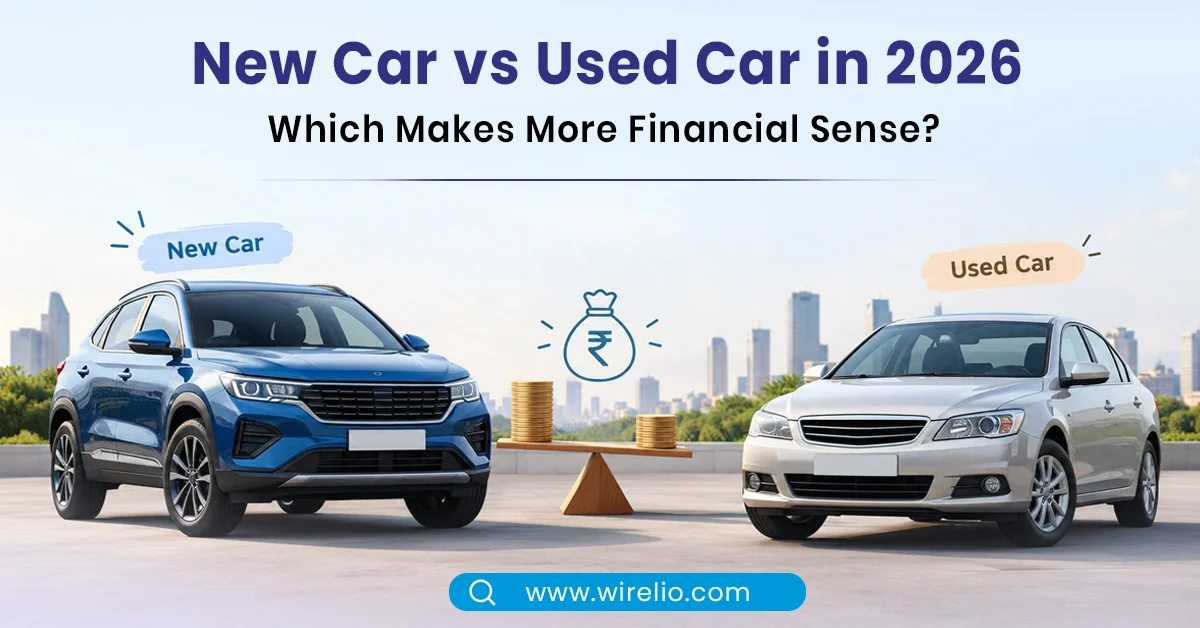

A new car offers the reassurance of a fresh start, while a used car can deliver more features for less money. But when comparing New Car vs Used Car in 2026, the smarter choice depends on more than the showroom price. Depreciation, insurance, maintenance, financing and resale value all influence what you actually spend over the years.
1. Purchase Price and Depreciation
A used car generally costs less upfront because the first owner has already absorbed some depreciation. A new car, meanwhile, offers the latest features, a known ownership history and typically a manufacturer warranty.
Depreciation is an important part of car ownership cost in India. A new vehicle can lose value as soon as it enters the resale market, although the rate varies by model, demand, age and condition. Buying a well-maintained used car may reduce this financial impact, but an unusually cheap vehicle could have hidden problems.
2. Insurance, Maintenance and Hidden Costs
New cars usually have predictable early maintenance needs and may include scheduled-service benefits or warranty coverage, subject to the manufacturer's terms. Used cars can require repairs, replacement tyres, battery changes or suspension work sooner.
Insurance also deserves attention. India's Insurance Regulatory and Development Authority (IRDAI) confirms that third-party liability insurance is mandatory for vehicles on public roads. Comprehensive cover can add protection for the car itself, with premiums influenced by factors including vehicle age and insured value.
For a used car, check service records, accident history, outstanding loans, registration documents and insurance validity. Budget for an independent inspection and any ownership-transfer costs. Official ownership-transfer procedures are available through Parivahan.
3. Car Loan, Cash Purchase and Festive Discounts
A lower purchase price does not automatically mean a cheaper loan. Compare the interest rate, processing fees, down payment, loan tenure and total interest payable. A longer tenure can reduce the EMI while increasing the overall borrowing cost.
Festive season car discounts in October 2026 can improve the value of a new vehicle. For example, Autocar India reported offers of up to ₹75,000 on selected Tata Nexon variants during October, subject to eligibility, location and stock availability. This is a model-specific offer, not a universal discount.
Compare the final on-road quotation rather than the headline saving. Also check whether exchange, loyalty or scrappage benefits apply to you and whether they can be combined.
4. Which Option Makes More Financial Sense?
A new car may suit you if you plan to keep it for many years, want a manufacturer warranty and prefer a known service history.
A used car may suit you if your budget is limited, you want to avoid some initial depreciation, or you need a higher-specification model at a lower purchase price.
The best comparison is the total cost of ownership over the same period. Include purchase price, loan interest, insurance, fuel, servicing, repairs and expected resale value. Your annual mileage and how long you keep the car can change the result substantially.
Frequently Asked Questions
Is it better to buy a new or used car in 2026?
Neither is always better. Compare the car's condition, ownership costs, financing and how long you intend to keep it.
Are used cars always cheaper to maintain?
No. Older vehicles may need more repairs, while maintenance costs also depend on the model, mileage, condition and parts availability.
Is festive season the best time to buy a new car in India?
It can be a good time to negotiate, but discounts vary by model, dealer, location and stock. Compare final quotations before booking.
Should I pay cash or take a car loan?
Cash avoids loan interest but reduces available savings. A loan preserves liquidity but adds borrowing costs. Consider your emergency fund and the full repayment amount.
The Verdict
The financially sensible car is not necessarily the cheapest one or the newest one. It is the vehicle that meets your needs at a sustainable total cost. Compare real quotations, inspect used cars independently and look beyond the EMI before making a decision.

No comments posted yet. Be the first to express your thoughts!